Conducting a Kid’s Choir Remotely

With the latest pandemic crisis, most of us are feeling the effects of isolation. If we are teetering on the edge of hopeless monotony, our children are most likely in the same boat, but they do not have the life experience to process these feelings through a mature adult lens. By creating normalcy and adapting our weekly activities to accommodate these extreme conditions, we can send a message of perseverance and flexibility to our children as well as form a bit of a shelter for their tender rendering of current events.

Many choir directors and music teachers are turning to online classes and rehearsals, and I think this is wonderful! Both of my daughters have had online violin classes this week, and while in-person time cannot be exactly replicated, I am very grateful we have the technology to connect in this way.

Choral/group classes pose a small challenge compared to one-on-one classes, but I believe they can work. I wonder what it could look like to stagger rehearsal times and work with smaller groups on harmony and part singing. If you have the time, could you subdivide 20-30 minute segments to spend focused time on challenging parts with specific groups? Providing an emailed flow sheet to parents could really make this possible and viable.

Another project to try with online directing might be to give children the opportunity to take turns “leading” a warm up time. Very rarely would a children’s choir director be able to have such a captive audience, and it might create the perfect atmosphere to allow children to step up and take ownership of some of the directing elements. Chances are a parent will be at least within earshot to help maintain focus.

While these rehearsals are uncharted territory for most of us, I believe they will only help us grow. One of the main reasons children’s choirs need to survive is because we are teaching our children that together is better. Even if we have had to cancel concerts and performances, and we don’t know when we will be back up and running, the best message we can send our children is that we still cultivate, we still enjoy our efforts, and we still sing! During this crisis, we need to be a community, and this connection time of singing together even over the internet will perpetuate the hope of coming through even these lonely times as a stronger and unified people.

Please let me know what you are doing to make these rehearsals happen. Are you using Zoom? What has been a surprise or a fun activity that has worked for your group? Keep singing!

At the Sing! Conference in Nashville

The beginning of the school year proves to be a dense, busy time for most families. Whether you are kissing your kindergartener goodbye before she steps on the bus for the first time, packing your college freshman up for his first year away from home, or guzzling too much coffee as you organize your homeschool year, you probably find yourself saying, “If we can just get past this (fill in the blank), then we can settle down.” The trap is that we can live a whole year of “just getting past” the next hurdle to then face down the next one with the same mentality.

We have had a year like that in our family, and it has been exhausting. However, I have found myself in a rare morning of calm and quiet, and the Lord is gently nudging me to remember that every moment of life is a gift from His gracious hand. The hurdles of life are connected by several steps, and each step takes you farther along on your journey. In fact, there are many more steps than hurdles, and I’m reminded to not miss those steps because I’m intimidated by the jumps.

I’ve had the privilege to speak at a few events this year, and currently, I am attending the Sing! Conference by Getty Music in Nashville. I am so excited to speak about Building Vibrant Children’s Choirs, and all the preparation and work is about to be realized. Joining hundreds of other talented and passionate directors from all over the world has been so good for my soul. I have been able to slow down and enjoy the conversations that will happen over the next three days. These precious co-laborers are a wealth of practical knowledge and inspiration, and I am humbled to be here with everyone.

I am grateful for this opportunity to soak in the quiet and get filled up by new friendships with others passionate about singing together. I am grateful for the opportunity to speak about singing with our children. I am excited to race into the school year after this period of refreshment with newly aligned reminders to enjoy each step and not merely focus on the hurdles.

We have much to sing about along our journey, so let’s tune up and encourage each other as we go! Have a blessed Monday.

Your Family Songbook

I am so excited to share about our family’s songbook, the keeper of our corpus of songs. This book serves as a record of the songs we sing together. When we open its pages, we are reminded to sing fully and richly, and it helps us to avoid a song rut. We are also able to build impromptu devotionals from the written song lyrics. I believe every family can benefit from keeping a songbook because it becomes a concrete cue to sing together and talk about the songs.

Our family songbook is relatively simple–definitely not Pinterest-worthy–but it gets the job done. It is comprised of a three-ring binder, some dividers, and paper. I wanted to make it personal, so I created a cover page for the outside of the binder for fun. The real treasure, though, is the collection of dear songs inside. I have catalogued the songs in a table of contents, and I have used dividers to organize the songs into categories.

As you can see, my table of contents pages are hand-written with ample space to add more songs as we come across them. Obviously, the Christmas section could hold so many more, but this book is a work in progress, and as each season comes, we will encounter more songs to add. I also want to keep in mind that this book has been carefully curated–the songs have special meaning and truths that we want to pass along to our children.

We have 8 sections for our songs, and these sections really help in putting together a time of family worship! The sections are Gospel (in message, not necessarily in style), Scripture, God’s Character, Doctrinal, Statement of Faith, Christmas, and Adoration. If our scripture passage is Philippians 3, we can find “Knowing You” by Graham Kendrick in our book, and we have all the words available to a great song written from the text. These songs also serve as a starting point for a devotional.

Once we determined our sections, we just started sorting our songs we had collected over the years, and we had the beginnings of our personal songbook. Some of our songs are sheet music we had bought. Some of our songs are free chord charts, and some are simply lyrics to help us sing a capella or reflect on the poetry.

Simple, effective, and precious, this songbook serves our family as a documentation of our faith, worldview, and values. We could easily just look up words to songs on the internet or open a hymnal, but making our own book keeps these songs in front of us and gives them a weight of importance for our children. If the song makes it into the book, it must be important! And I could talk for hours on the ways this visual tool encourages our family to sing regularly together.

If you want to create the meaningful memory of singing your faith with your children, I highly recommend pulling out some crafting supplies and putting together your family songbook. You don’t have to do it all at once. The beauty of this resource is that you may add to it year after year. Why will a personal songbook help you reach your goal of singing daily with your children? Just seeing the book will prompt you to initiate a song. Once you start singing, your children might open the book and be reminded of a favorite they want to sing. You will also think about the words of the songs you compile and appreciate the artistry of well-crafted poetry as you linger over the written lyrics.

Now it’s your turn! What songs would you include in your book? What categories would you add? How would you use your songbook, systematically or spontaneously? Please let me know!

Remember, the memories you make singing with your children will create lasting connections and deep-rooted foundations that will last a lifetime. Open your book and sing with your kids today!

Growing in Singing: A quick overview of developing little singers

Most children enjoy music from an early age. In fact, a mother’s singsong voice creates a special bond with her child from infancy. Singing, then, becomes a natural response as a child seeks to participate in this wonder we call music. As a children’s choir director, I’ve had the privilege to serve in positions ranging from preschool through early high school, and I have always enjoyed watching children discover their musical talent during each stage of development.

The earliest singers (infants through 2 years) are in a constant state of discovery. Every taste, every book, every animal at the zoo are new to these precious little ones. Because of this newness, music may literally rock their world, and their most amazing musical discovery during this stage is that they can sing, TOO! I want you to imagine that you are your child’s tour guide through these new experiences. As you sing songs to your child, always keep the invitation open for him or her to join you.

One of my favorite activities to do with my very little ones is to lead them in a singsong mimicking game. I sing a simple monosyllabic la or ma in a repeated pattern of pitches and wait for them to try to sing it back to me. Then we repeat the game a few times before I sing a simple nursery song with them to let them make a connection. At six months of age, you will get a stare of wonder back, possibly with a sound or two, but don’t think that this game is not being absorbed. After a few months of consistent practice, the studied look will turn into a sweet little voice learning to sing. It just might be the cutest sound you will ever hear.

One important note about the mimicking game is that all children will develop differently, so keep it consistent, even if it seems that your child is losing interest or has a beautiful song one day only to sing nothing for two weeks after. Music is much like a language with inflection, phrasing, and sounds, so singing will be a building activity over time.
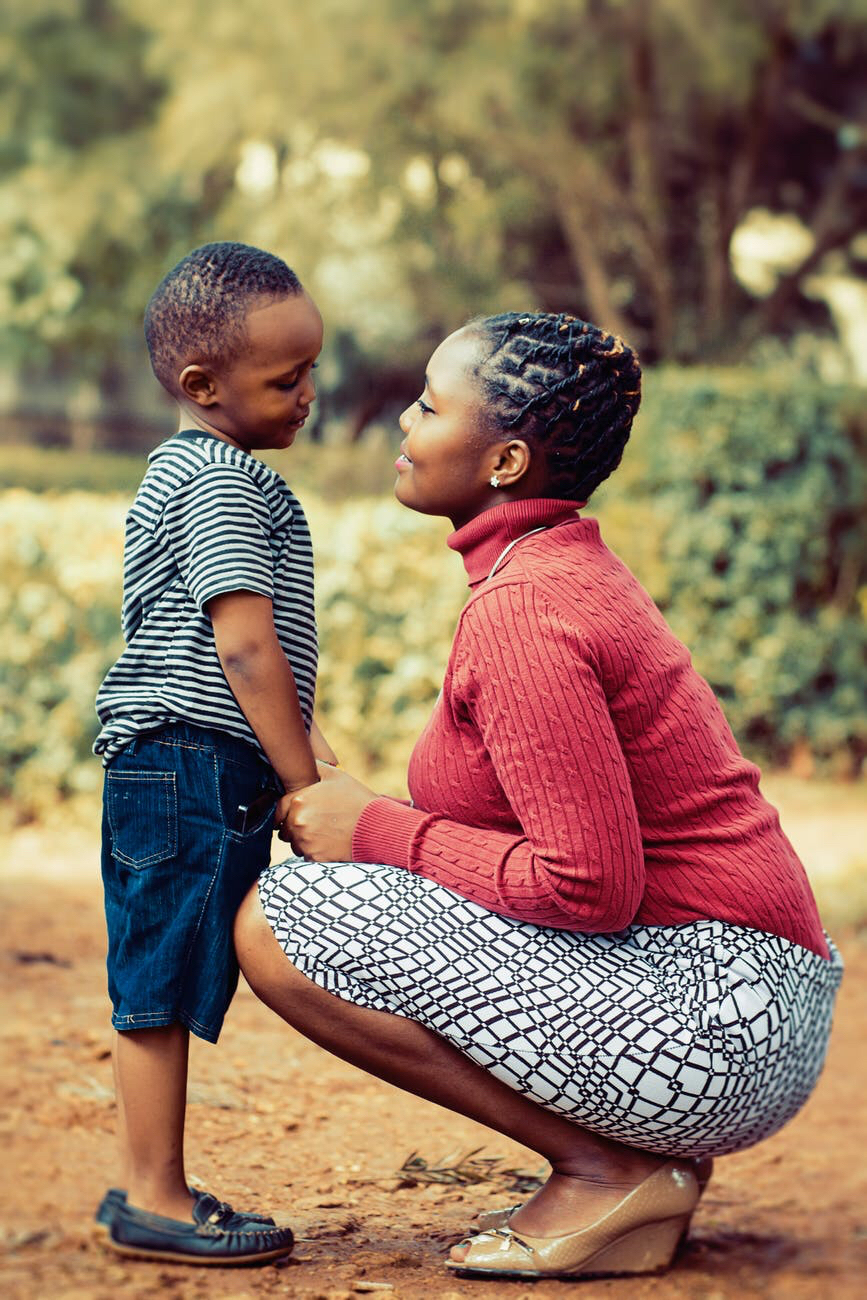
The next stage, the preschool age of 3-6, consists of a time of learning to join others and interact as part of a group. We see this happen as children begin to play with each other instead of playing next to one another. A preschool singer knows he can sing himself, but he discovers that he can also sing as part of a group. If you have been inviting your child to join you in singing, he will begin to see that he can sing with his peers, too. Over these years, I love to cultivate this idea of singing together as one voice. Some added benefits are that you can start to fine tune listening skills as you encourage your child to sing with others instead of next to each other. (Who wouldn’t want that?!) One activity to help foster this growth in your preschoolers are to start singing a familiar nursery song but stop before you finish the phrase. Your preschoolers will want to finish the phrase and then keep singing with you when you join them. Also, whenever you hear your preschoolers singing, if possible, start singing along with them. Along with the invitation to join in your song, this builds the awareness of singing together both from a leading and a following position.

The third and fourth stages overlap and seem to vary greatly depending on the wiring of each child. My primary background in music education has been spent working with elementary and middle school children, so this is where I tend to geek out! The third stage is one of singing to make music, not merely sound. When our children are very young, we simply want them to understand that their voices can make a musical sound and that it can make that sound with others. During the third stage, they have acquired the skill to listen to the music and voices around them, so they are ripe for an activity of voice molding. This molding is not operatic training but simply a fun, leveled up version of the mimicking game you played with your children when they were toddlers. I like to ask my children or students, “Can you sing this phrase like I do?” Then I sing the phrase in many different ways, including a few silly ways, and I invite them to mimic me. With this simple game, you are working on dynamics, vowel sculpting, tempo, and many other singing techniques, and it gives you an opportunity to help your young singers differentiate between full-voiced singing and non-musical shouting.

Once children are able to change their singing style on command, they usually move into the fourth stage of vocal development. This stage takes them all the way into advanced choral singing in the later high school years. Your children really start to blossom as singers when they begin sing to serve the song. Serving a song involves singing in an appropriate style as part of the group with proper ornamentation. Some activities to start this stage are to sing rounds with your children and to introduce a wide variety of genres of singable music. Rounds like “Row, Row, Row Your Boat” or “Father, I Adore You” begin the task of harmonic singing because of the listening/focusing skill that must be present. With a round, a child starts to hear viable harmony structures, and you can then introduce a second part (usually a higher harmony works best for younger children) phrase by phrase.

Singing a wide range of genres from classical pieces to world pieces to gospel pieces will naturally develop your child’s ear to different styles of vocals and ornamentation. We can all learn when we push ourselves outside our normal listening world, so I would encourage you to become a student yourself and dive into a new genre this week! Your children, now in upper elementary and middle school, will benefit from focused listening as they are asked to notice nuances in different styles of music. As they get to practice different styles, they might just find what I like to call their own VFL (Voice for Life–more on that another time). And isn’t that exactly what we want–to instill a lifelong love of singing in our children?

What other activities do you enjoy with different age groups? We could probably talk for hours on this subject alone, so I would love to hear from you!

Singing with our kids. I can’t imagine a world where we couldn’t connect this way. Remember, your children will stack up piles of memories of singing together if you do it daily, so there is no time like the present!

My 4 Top Picks to Maintain a Singing Culture in Your Family

Singing with our children began simply as a tradition of singing a song together at bedtime. After a while, our singing expanded to car singing, morning singing, and (my favorite) spontaneous singing. When my husband and I wanted to use our song times more effectively for discipleship, we started using some resources to assist us in our efforts. These resources have brought focus and depth to our singing, so I thought it would be helpful to share the top four resources I use with my children. I also want to add that I am not receiving any compensation for sharing these resources, and I have used all of these resources without solicitation.

The Cedarmont Worship for Kids CDs are collections of a variety of worship songs keyed in a child’s vocal range, and they are my first pick. I have used these since I was an elementary music teacher several years ago, and I still love singing along with them with my kids. I really appreciate arrangements like these that children can sing without straining below their natural range. These recordings can also grow with your children because they do not rely on midi instrumentation like many children’s CDs. With several volumes of mixed classic worship songs, they are great to play in the background during your day or to use for family worship time.

My second pick, For the Cause from the Getty Kids Hymnal Series, is a collection of hymns that were carefully written and curated to encourage a heart for missions in our children. With excellent artistry, content, and musicianship, this album makes hymns accessible to children, and you can even download a coloring page, sheet music, and mini devotions for free from Getty Music.

Both volumes of my third pick, Hymns for a Kid’s Heart by Bobbie Wolgemuth and Joni Eareckson Tada, are unfortunately out of print, but you can find them used from time to time. They are worth the hunt because they are classic hymns with short back stories about the hymns, sheet music of the hymns, and beautiful pictures. An added bonus CD of excerpts of the hymns makes it a complete resource to really immerse your children in a rich study. In my experience, children sing much better when they have an understanding and connection to a piece of music.

Although Hymns for a Kid’s Heart is out of print, the more recent volume of Christmas Carols for a Kid’s Heart is available. I have not personally used this book yet, but it’s on my list for the upcoming advent season. Christmas is a wonderful time to start singing together as a family!

The last resource I want to share may seem obvious, but I still want to mention Spotify as a favorite in our family. Spotify streams just about any song you can imagine as a subscription service. When my husband and I choose a new song to teach our children, I like to stream the song throughout the day in the background. If we used only our own song library, we would be limited, and using several different versions of the same song can keep it fresh as we all learn it. Spotify also makes car singing so.much.fun!

So there you have it! I hope these resources can serve you as they have served our family. What other resources do you use? I’d love to hear from you, so please leave a comment. Remember, singing with your children daily will make lasting memories with them, so give it a shot. I promise it will be fun!

Life-Giving Songs: Putting Together Your Family’s Corpus of Songs

As parents, we desire to equip our children with the wisdom and fortitude needed to navigate the many different waters of life. We know all too well that they will encounter gentle streams as well as roaring rapids, but we never want them to feel isolated in their journey. Our children must be empowered to respond with reflection, hope, and endurance no matter where they are in life. Compiling a body of life-giving songs for your family is one way to strengthen and guide your children’s decisions and reactions on their voyage through life.

A few years ago my husband and I became aware that our singing as a family was special, but it was very scattered in focus. As a couple involved in church music, we were constantly learning new songs to lead on Sunday mornings, and our children kind of caught those songs from being in rehearsals. We would just pull a random song from our hat for our evening singing one night and pull another one of the freshest songs out of the hat for the next night. We assumed that our children “knew” the songs because they could sing along with us, but we realized we could do so much more to disciple our daughters through this nightly tradition. So my husband suggested that we actually start building a family library of songs to carry in our hearts and minds. We call it our family corpus of songs.

We have spent some time curating songs we believe will strengthen the faith of our children and give them words to express the many emotions life will draw out of them. We continue to add to this list as we come across new songs. Just as we hide Bible verses in our hearts to incline our affections and lives toward Jesus, we also fill our hearts with scripture-saturated songs to flood our thoughts and inform our actions for every season of life. Because song uses poetry and music to adhere to our memory, a song learned in our youth can be retrieved in adulthood to minister in a powerful way.

My husband experienced this in a profound way when we found ourselves in a time of great sorrow. “Strength for today and bright hope for tomorrow…” from “Great Is Thy Faithfulness” permeated his thoughts as he faced his grief. Oh! the comfort he experienced as he meditated on those life-giving words. Those few lyrics ministered to him in a way nothing else could, and we wanted to give the same line of defense and inspiration to our children.

We began by choosing impactful songs to sing during our evening singing time, and we spent several nights on each song to familiarize our daughters with the words. We also talked through the lyrics informally as a part of our day. We did not want to suck the joy out of our singing by being too dogmatic in our treatment of the songs, so the conversational approach has been very effective yet organic in feel. Now we can pull from these songs as needed, and the girls are starting to make their own connections.

As we have learned the songs as a family, we have added them to our songbook (Watch for a whole post on this!) both as a review tool but also as a sort of singing log and journal. Now we have a special book to catalogue the important songs of faith that have been dear to our hearts. It is a wonderful source of family devotions, song ideas for family worship, and memories. It is, indeed, the keeper of our family’s corpus of life-giving songs.

As my husband and I remember old songs and discover new songs, we keep adding to our songbook. We have a visual reminder in this book of the songs we hope to teach to our children, and we can keep a record of truths that we have covered in the songs we have already learned. Much like working through a catechism, we are working through these songs in an organized way. Because we believe singing will enable our children to store these truths deep within for a lifetime of encouragement and wisdom, the tool of the songbook has been a fantastic assist in a methodical approach to discipling our children as well.

So what would be in your family’s corpus of songs? How do you compile your songs, and what criteria guide your choices? I would love to hear from you as we grow our songbook.

Next week, I’m looking forward to opening our family’s corpus of songs as we walk through putting a songbook together. If you are crafty, you are going to love this next post! If the thought of crafting gives you hives, no worries; this is your family’s book and can be whatever you want to make of it. Singing with your children will create life-long connections and memories with them, so be intentional in the songs you sing and get to singing! Your children may not care if your house always passed a white-glove test, but they will cherish all the hours you logged singing with them.

Encouraging the Reluctant Singer

Most young children love to sing and move to music. Many older children still find great enjoyment in music while singing in a choir or learning to play an instrument or curating their personal playlist. For those of us who cannot imagine a life without music, the children who seem to have an aversion to singing and even to music bewilder us. Some children seem to lose their interest in participating in music, and they begin to categorize themselves as “non-musical.” While it is true that not everyone is born to major in music performance, I believe that music is a gift from God to all of humanity. If we believe that the beauty of nature and the warmth of community are God-given delights, I do not think it is a hard reach to classify music in this same way. And just because some fail to bask in the beauty of God’s creation and others shirk association with a community, we should not reason that they are any less gifts to be enjoyed at large. The burden to enjoy a gift falls on the recipient, not the giver. Music is no different, and I believe we should fight for its enjoyment and its abundant use in the lives of our children.

So how do you ignite a love of singing and music in a child who would rather wrestle a jellyfish than stand to sing in a choir? Most of the time, we can do a little detective work to discover the why behind this reluctance. This why usually boils down to one of three reasons: 1.) Confidence, 2.) Practice, or 3.) Distraction.

Let’s take a look at the first reason—Confidence. Somewhere in the past 30 years, singing has become defined as “that which an individual does with a microphone on a stage in front of a large crowd.” Maybe I exaggerated a tad, but if you ask most children about singing, it usually involves either a microphone or an audience. The general idea is that only those “good enough” should hold a microphone and sing a solo; everyone else becomes a spectator or background decor. I believe this thinking has shaken the confidence of would be choir members, and the lack of togetherness in singing has suffered greatly. A child who might have joined the group lacks the confidence to sing from the misinformation that singing belongs to a select few, and this child tragically begins to think of himself as one who does not sing.

The good news is that we can reverse this thinking in our children. Simply asking them to join you in singing affirms them in a powerful way. When you single children out and place value on their participation, you are investing mightily in their confidence. You are also demonstrating that you do not want to sing alone and that their participation enriches your experience. For the children who hold back because of confidence, an invitation could be all it takes to encourage them to sing.

The second reason, practice, actually refers to the customary way a child thinks an activity should be done. I believe the practice of singing can be an obstacle in a child’s participation because he struggles with a preconceived idea of how singing should look. If his expectations are not met, he will fail to join in singing. This can look many different ways. A child might have only been exposed to one style of music, so engaging in a new style might be difficult. Another child might have perfectionistic tendencies, which makes the learning process a difficult practice. Every child is coming from a unique place and will have differing views on how singing should be practiced. Our job is to continue to offer a wide variety of ways for our children to enjoy music and singing.

One encouragement we can give children who seem to be reluctant in the practice of singing is to ask how they would sing the song or how they might change the song. If we show a child we value his input, we are validating his opinion and building trust. We are also helping the child to think critically about the song and why he is having a hard time singing. Instantly, the child has a connection to the song and may just start singing with you.

Lastly, children may be reluctant to sing because of distraction. Quite literally, a child might be completely preoccupied with his thoughts and might not have the mental energy to invest in singing at the time. No need to trouble shoot here because this kind of distraction affects all people from time to time and will correct itself. The type of distraction that habitually keeps a child from singing is the list of to dos that plagues modern society. Children are not different from adults in their propensity to prioritize both the familiar and the valued. If our children are in need of a PA to keep their schedules, they will inevitably be distracted, and only the most important tasks and activities will receive true attention. Singing may rank very high on some children’s lists, but many children might fail to see the point of prioritizing singing and will be very reluctant to join the song.

The truth is that we all have a limited amount of expendable energy, so the way to help a distracted singer to engage is not to add to this list of to dos but rather to incorporate singing into the fibers of life. A parent might do this by making car singing a priority or weave a song into the day’s routine. A choir director can encourage distracted choir members by providing a focused rehearsal time. (Please watch for a coming post on focused rehearsals and my favorite technique of using time chunks.) As a director, you can greatly encourage today’s busy children to invest in the choir by choosing songs that are dense with musicality and content and building your rehearsal time around one thought for the day. The goal for a distracted singer is to get him to make singing a worthy effort that will become a priority.

Reluctant singers may become vibrant singers with consistent encouragement. Every year, I enjoy watching students in children’s choir come alive in their singing. It is worth every bit of effort to diagnose and treat the causes behind the reluctance because of the joy that results from the child’s newfound song. How beautiful to give this lifelong gift of the world of music to a child!

Using Songs to Teach Poetry to Children (Part 3)

A good song begins with good poetry, so we are learning to harness the innate art of language of a well-written song to open the world of poetry to our children. My last post only scratched the surface of the poetic elements displayed by the song “O the Deep, Deep Love of Jesus,” but once you get going, you will probably be able to find more poetic treasure hidden just beneath the surface. In time, your children will have fun pointing out new elements they have discovered even before you see them, and that is when you know you have thoroughly succeeded in your efforts. Today, let’s look at some ways to gently begin this journey with your children as well as some ways to dig deeper for older children.

Photo by Pixabay on Pexels.com

One of my favorite songs to sing with my children is “Do-Re-Mi” from The Sound of Music because of the very first line: “Let’s start at the very beginning, a very good place to start…” I propose that we take this basic yet profound advice.

The beginning step to gently introduce your children to poetry through song is simply singing a familiar song together. Remember to choose a well-written song (see part 1), but it need not be complicated or new to your children. After you sing together, take a minute to ask them what they know about the song. Questions like “Can you hear a rhyme?” or “Can you tap out the beat of this song?” will really help you determine how much your children have noticed on their own and will give you a starting point. Very young children could spend a whole week just on rhyme and rhythm. An extension activity for children who are 4 to 7 years old is to find how many additional words they can rhyme with the words within the rhyme scheme. Then they can substitute those rhyming words for the originals, and you will probably coax out a giggle or two with the funny new phrases.

Another extension activity to engage your young ones is to have them step (or stomp!) the syllables of each line. You may want to introduce the stressed and unstressed syllables by stomping harder and stepping lighter, respectively. Even young children will pick up the pattern of the meter in this way, and you will get to log a few steps on your pedometer as well! Because we learn through all of our senses, the touch element of movement will only enhance the hearing component you have added to your song/poem study.

Your older students can even enjoy songs using these two activities, and they will certainly be assets as you begin talking about the atmosphere that is set by the song’s major or minor key. Younger children can hear when a song is happy (major) or sad (minor), but they are not nearly as verbally aware as older children. You may challenge your older children to relate the message of the song to the key in which the song is set. Your younger children will learn so much from simply “sitting in” with you and your older children as you discuss how the music of the song gives the appropriate climate for the words of the poem. Some good questions to level up your discussion with older children are “How does this melody match the message of the song?” and “How does the tune make you feel?” I would not settle for simple, wimpy one-word answers, so make sure you ask open-ended questions. The more descriptive your children are, the more lasting their connections will be.

As you lead the discussion with your older students, don’t miss the opportunity to talk about the climax of the song. A well-written song will have a melodic climax that will highlight the text in a lovely way. For instance, the climax of the song “O the Deep, Deep Love of Jesus” matches perfectly with the line “Underneath me, all around me is the current of Thy love.” The high point of the poem is the never-ending love that continually washes over God’s children, and the melody reaches its climax on the word “love.” Then the melody descends to a final resolution for the last line. Your older students will be able to hear this element fairly easily with a little guiding from you in the beginning.

Finally, as you dive deeply into your chosen song with your older children, instruct them to be on the lookout for any kind of metaphor or simile in the song. Many times, a song’s melody will also have a bit of a personality that will reflect whatever metaphor is most prominent in the piece. Metaphors can be blatant or more hidden, but they are fun to find and feel like a delicious extra layer of meaning for your kids to explore. Seeing that little light bulb above my daughter’s head at the discovery of a metaphorical meaning reminds me that all of the time and effort to sing with my children and appreciate the artistry of the poetry is worth every minute.

Photo by Pixabay on Pexels.com

As you journey together through your family’s library of songs, you will have many opportunities to notice various poetic elements not covered in this post in a beautifully organic way. Instead of throwing a list of these elements at your children and treating a poem as a scavenger hunt, enjoy the song together, pulling out the devices as you happen upon them. It’s as if you are taking a stroll through the words and peeking behind the bushes and rocks for these flowers of artistry. You don’t want to pick the flowers so that the landscape of the poem stays beautifully intact.

One more enrichment activity to help children of any age interact with a song is to play an instrumental version of a new song, one they do not yet know, and have them draw a picture of what they hear. Then spend some time “living” with the song over the next few weeks as you discuss the different poetic elements. After your children form some familiarity with the song, play the instrumental for them again and have them draw another picture. You might even give them a different art media to use to help them break from the original drawing they made. You (and they) might be surprised to see how the poetry informs their second piece of art.

I hope these three posts have given you some ideas and encouragement to further your study of poetry as well as spur you on in your endeavor to sing often with your children. If you have any other insights and/or ideas to add to this very brief starter on music and poetry, please leave them in the comments below. As always, I want to remind you that your children will remember singing with you more than they will remember that trip to the mall with you, so make the most of your time with your children and sing with them every day!

Using Songs to Teach Poetry to Children (Part 2, The Process)

In this current series of posts, we have been considering the use of songs to forge a pathway of true appreciation of poetry for our children. The complexities of poetry can prove a bit abstract for a concrete-minded child, but music can be a useful tool to actually demonstrate the subtleties of the art of poetry.

Today we will look at a hymn which fills all the necessary requirements to earn a place on the well-written song shelf. “O the Deep, Deep Love of Jesus” has been sung for almost 150 years, and the poetry itself is so inherently musical that the text has been set to several different melodies and arrangements. The story behind the song touches my heart in light of its message. Let us always remember that songs were written in a time and place, and that context can birth a deep connection to the meaning.

beach clouds dawn dusk
Photo by Josh Sorenson on Pexels.com

“O the Deep, Deep Love of Jesus” was penned by Samuel Trevor Francis. His poem relates God’s enveloping love to that of a swirling, limitless ocean. One evening as Francis walked through London, downcast in spirit, he contemplated throwing himself off a bridge into the river. His faith was being tested, but instead of giving into despair, he anchored his trust in the love of the Lord and lived to write this beautiful hymn that so poetically portrays the words of Ephesians 3:18-19. The tune “Ebenezer,” which pairs so nicely with the oceanic imagery, is the most widely used melody for the hymn. The poem reads very autobiographically for Francis’ experience on the bridge over the current-driven river that day. Instead of being overtaken by the literal waves of this world, he threw himself into the great deep that is the love of God. What a profound analogy!

For brevity’s sake, we will focus on the first stanza only. As you read the words, read them aloud to yourself. Trust me! Poetry is best read aloud just as songs are best sung aloud. You will notice the meter and the rhythm almost immediately.

O the deep, deep love of Jesus! Vast, unmeasured, boundless, free;
Rolling as a mighty ocean in its fullness over me.
Underneath me, all around me is the current of Thy love,
Leading onward, leading homeward to Thy glorious rest above.

Do you hear the current? Did the regularity of the stressed syllables catch your attention? The artistry of words feels like this strong, yet benevolent ocean. The most popular setting of this hymn, “Ebenezer,” reinforces this feel of a “rolling” ocean with rises and falls that keep coming like the waves upon the sea. When you sing this hymn tune with your children, you may easily sway like you might if you were on the deck of a ship to feel the beat of the song. The swaying will bring the syllable structure into focus, and in no time, you have shown your children the poetic element of meter. You even get bonus points because you kept within the maritime theme with your movement!

The device of rhyme becomes simply delightful to teach children using a song. Children are eager to spot rhymes, but with a song, you have the added delight of singing the rhymes and finding the rhyme scheme. This hymn has a very basic, yet effective, rhyme scheme (AABB) that is highlighted by each musical phrase. Children can hear the actual rhyme scheme and differentiate it from other similar sounds within each line. I also enjoy introducing assonance with this song because of the multiple long E sounds found within the words, and this specific poem assists you in showing your children the difference between a true rhyme and just the same vowel sound in a pair of words.

The last two elements I want to highlight using this song make the true poetic magic happen. Metaphor and atmosphere are the true standouts in this piece’s artistry. Go back to the waves crashing with the pulse of the song. Now picture this “vast, unmeasured, boundless” ocean that is the love of God. Do you feel the never ending, always flowing love of God surrounding you entirely? What atmosphere is set when you think about a totally encompassing sea of God’s perfect love? When you sing with your children and dive into this song, your children should be able to “see” this metaphor and be taken by the atmosphere. When you discuss these elements with your children, it is a perfect time to ask open-ended questions and give validity to any sincere answer. You are helping them to develop their personal taste and their observation skills when you provide a safe place to discuss their own subjective opinions about the arts. As your children form a personal connection with the song, they will inevitably store this big view of the love of God in their hearts.

Oh! So much more can be said, but I will wait for the last post in this series. I truly hope this has helped breathe new life into your treatment of poetry and maybe even into songs that you sing every day. Be on the lookout for Using Songs to Teach Poetry to Children (Part 3–Leveling Up and Down).

Don’t forget to sing with your children today! Your children will probably not care if you were always dressed to the nines, but they will cherish the memories of singing together daily.

Using Songs to Teach Poetry to Children (Part 1)

Poetry can be hard. Just hard. But poetry is also the flavor to our language. The creative license to morph, change, manipulate, and even make a joke of our words gives the poet power to communicate beyond the written words on the page. It is this space between the lines of poetry where the true artistry lies.

When we teach poetry to children, we might stare it down like a deer caught in the headlights of a quickly approaching vehicle. We can certainly present it as a battery of literary devices, such as alliteration, metaphor, consonance, etc., to check off our list, or we can simply require the memorization and subsequent recitation of the “great” poems. They will catch an idea of poetry and be able to recognize its shadow, but really getting to know poetry will draw attention to the message or impression that is covertly placed between the words. The beauty of poetry really lies in the relationship between the concrete and abstract, and our children are still working to create a category in their world for the abstract. So…teaching poetry to children can be very hard.

Enter the well-written song! If I were writing a comic book right now, this would be the entrance of the super hero. A song can be your best and first tool to help your children move away from dissecting poetry like a science project and start to notice the many elements which make poetry the art of language.

Photo by Steve Johnson on Pexels.com

To begin, let’s take a moment to define a well-written song. All songs are not created equally! The first quality of a well-written song is that it must be crafted with intentional meter and sound devices. Secondly, a well-written song will have a melody which supports and gives deeper meaning to the subject of the song. This connection between music and meaning provides the bridge for children to begin understanding the unspoken communication of poetry. Finally, a well-written song will evoke emotion of some sort because the message has stretched past the intellect to reach the heart. Think of your favorite song, and you will most likely feel an emotional rise from within. You probably have great appreciation for your favorite song, so how wonderful would it be for our children to have the same appreciation for poetry? How much wider their world would be!

A well-written song provides hand holds for children to concretely “see” the abstract qualities of poetry. Additionally, most children naturally love music, and it can lighten the task ahead. Through the song, children can hear the rise and fall and the predictable nature of the meter because the melody calls attention to these features. The melody is also the avenue for discussion about climax and resolution or discord. The key and arrangement of the song will open the door to mood and atmosphere, and the goosebumps you experience from a truly touching song provide the element of excitement to ignite a love of artistic language.

Photo by Ylanite Koppens on Pexels.com

So are you ready to give it a go? In the next two posts, I will walk through a song to illustrate the process and give practical steps to implement this process for different age ranges. You might be surprised, though, to find even your young children hanging with your older children.

As always, I encourage you to sing with your children daily. They will not remember if you always have your laundry folded and put away, but they will remember singing together and often with you!