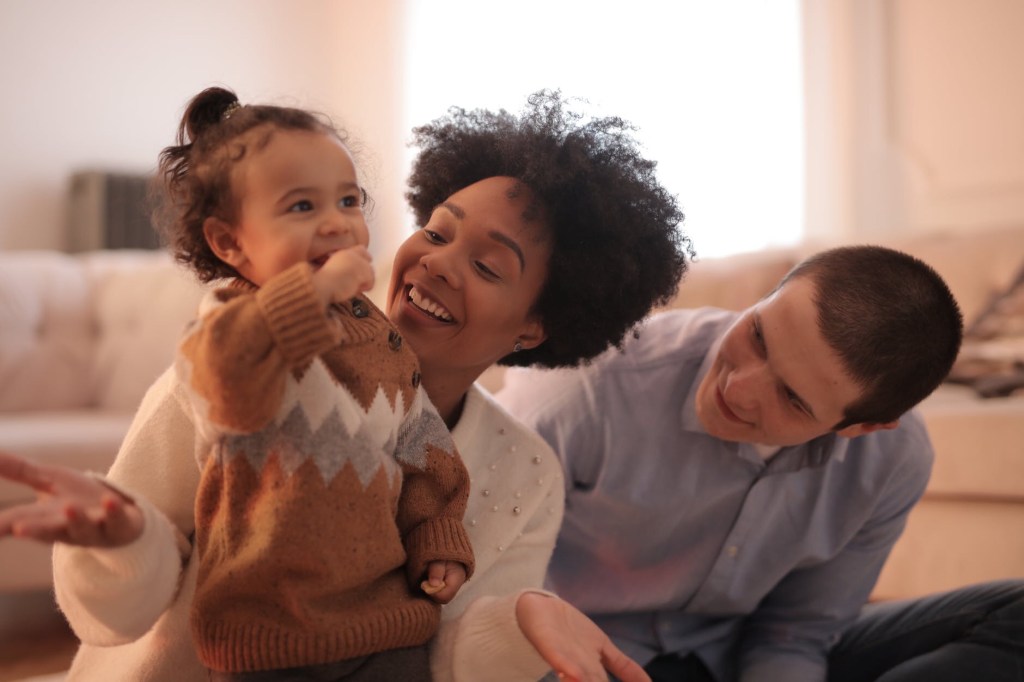
Watering Your Child’s Imagination

“Imagination creates reality.” —Richard Wagner

Every musical masterpiece begins in the imagination of a composer. Every pitch sung begins in the mind of the singer. Every rhythm is counted conceptually before it is heard.

Imagination is key to originality and creativity, so it is imperative that we water the imaginations of the children in our lives. Children have all the raw materials to build fantastic imaginations, but many times they start to wane in their ability to continue the construction of a creative imagination as they grow into adolescence. Our modern sensibility of reality has become an opponent of imagination instead of a product of it, but I would argue as Wagner stated that imagination can give birth to a better, future reality. Our cultivation of imagination in our children has a direct relationship to the creative efforts they will accomplish in their adulthood.

So how do we water this little sapling in our children? Their imaginations are nothing we have created—they were born with their very own unique creative seedlings. However, there are definite ways we can nurture this sprout into a fully bloomed plant, complete with fruit production.

One way to water is to introduce an idea but leave it unfinished for our children to then complete. Musically, this can look a lot of different ways. Challenging students to fill in a rhyming word in some lyrics can be a quick, fun activity to get minds thinking. Playing an instrumental piece and asking students to write a story to express the song helps young students to notice and adapt musical expression into a more tangible form. Encouraging older students to create a harmony to accompany a familiar melody illumines the path for future composing.

Another way to water this imaginative interaction with music is to spend significant time on ear training. All singing begins with hearing, and all good singing begins with converting listening into quality sound production. Good listening in music involves not only the hearing of the original sound but then the hearing and adapting of the sound being sung back. You might be surprised at how profound this approach can affect the sound of your choir. Children know they should listen to learn a part, but they fail to continue listening as closely to their own voices when they are singing themselves. Holding rehearsal in a very live acoustic room or hall can be really fun for students as well as help them listen more carefully to themselves. Singing rounds also helps children to listen carefully to their own voices as they fit their part within a bigger setting. Round singing produces quite a bit of giggles at the start as kids realize what a mess it can become before they really pick it up, so have fun and allow time for a few times though the exercise. 🙂

One last idea to help children develop their imagination and creativity in music is to make it a multi-sensory experience. Although we perceive music primarily through our ears, I propose that all five senses can either directly experience music or connect to music through associative experiences. When our senses interact with music, we connect more deeply with it and become more able to mold and shape it in an organic and creative way.

For example, I can listen to a song and pull my visual muscles into the experience by assigning a color to the song. If you’ve seen Fantasia, you have seen one artist’s visual impression of a song. We should be encouraging our kids to explore music in this way. Once you do this with kids a few times, they will start offering colors or pictures before you even ask. How fun is that?!

Our family has also seen an associative experience of music through smell and taste. Certain music we have heard at restaurants automatically makes our taste buds crave that cuisine. We are almost able to conjure the smell just from hearing that style of music. So why not help your kids start making this fun association in a very intentional way? Why not bake brownies and have a listening party? The smell of warm chocolate and the decadent taste might just stick to the song, creating a warmth and familiarity the children will want to revisit. At the very least, your children will remember the event and get excited for the next listening party!

Sensing touch through music can be both physical and emotional in nature. Vibrations from live instruments can be felt throughout the body. Beethoven certainly yielded some of his most creative works after he lost his sense of hearing by using vibrations to guide him. It makes me wonder if he had already experienced music in such a multi-sensory way that he had full confidence in this method of composition. Emotionally, music can also be felt profoundly in the heart. I personally respond to moving pieces or even certain musical intervals with a prompt display of goosebumps. Sometimes tears will flood my eyes as well. Responding to music by the sense of touch can actually reveal a deeper interaction with the piece than merely sensing it through sound. Can you imagine what kind of creativity could come from children who are being encouraged to dig into music in this way? Marvelous!

This is just the tip of the iceberg when it comes to inspiring creativity and imaginative growth in our children, but I hope it has inspired your creativity in leading them down this road. The sweet privilege we have to shape little minds is such an honor to hold. We must keep our children singing and growing. Water these precious ones for a future generation of creatives who can lead the charge for years to come.


7 Reasons to Sing with Your Toddler

Maybe you have been lamenting the fact that your Spotify profile boasts more Wee Sing and silly song hits than that indie acoustic band you discovered last year. Or perhaps you have to nurse your raw throat with honeyed tea after the marathon nursery song singalong you hosted in your child’s bedroom last night. Maybe you are relishing the fact that your little one doesn’t care if you can’t carry a tune in a bucket. Whatever situation you find yourself in, toddlers love music, and you are their primary DJ for the next decade, so let’s talk about all the wonderful benefits of singing with your toddler.

1.) Increased vocabulary

Just as reading picture books helps toddlers grow in language awareness by association, singing songs helps a toddler place words within a context. When a child practices these songs repeatedly, he is ordering new words and grasping their meaning in a cohesive way. The poetic element of music also assists a child understand the flow and rhythm of language.

2.) Motor skill development

Music, in general, provides the rhythm that a toddler unabashedly enjoys. He might jump or sway to the beat or simply tap his fingers gently. Although his dancing is quite clumsy, his little brain is hard at work to coordinate entire muscle groups to a perceived rhythm and mood. I am always intrigued by how easily a very young child can adapt his or her movements to the tempo and mood of a song.

Singing also adds another layer of coordination as the child matches verbal ideas with specific movements. “The Wheels on the Bus” is a perfect example of the concrete hand motions a child moves rhythmically to illustrate an idea that is being sung. We take this for granted as adults, but it is remarkable to see a toddler putting all of this together.

3.) Listening skills

Singing with your toddlers also introduces auditory discernment. Children must listen to understand and reproduce the words they hear. They also learn to match the volume and even the style of singing in some cases.

4.) Observation skills

Toddlers are not too young to begin hearing distinctions in different pieces of music. Questions like, “What instrument do you hear?” or “Should we march or tiptoe for this song?” help prompt them to take a moment to observe and even participate with newfound concepts.

5.) Aural development

Matching pitch might be one of the earliest refinements a child learns on his road to singing with others. In the preschool stage, children are beginning to understand that they may sing with others, so to prepare toddlers to make this transition, singing rounds like “Row, Row, Row Your Boat” may help tune their ears to match an outside pitch. Any song that has melodic intervals that are based on the tonic triad is excellent for little ears to begin making these pitch connections.

6.) Long-Term Memory

Music is magical! We have all heard the stories of the aged who cannot remember what happened earlier that day, but they can remember the songs from their childhood. We all employ music to aid our memory. Have you ever sung your ABC’s to alphabetize something? Do you skip count by 5’s in the sing-song way your third-grade teacher taught you? Yes, singing with toddlers teaches their brains to make pathways and store information in their long-term memory even before they comprehend the words they are singing. Remarkable!

7.) Building a loving bond

Lest we think that singing with our toddlers serves only utilitarian brain-building functions, I must mention that when you sing with your child, you are forming a lasting bond with her. That bond is filled with fun, love, and warmth. Studies indicate that people who sing together experience a rush of oxytocin, which is known as the bonding chemical. Those who sing together feel a connection that is not achieved in many other ways. It is such a beautiful byproduct of a delightful activity, and it costs nothing and takes no advance planning.

So what are we waiting for? Our house is filled with music for most of the day. We sing along with our streaming service, we make up silly songs, and we sing hymns in the evening. We dance and groove to our nursery songs, and we clap to songs with a strong pulse. My little guy loves music, and at 20 months, he is already singing and filling in the words he knows. Almost nothing excites him more than one of his favorite songs!

What are your kids’ favorite songs? Do you all sing together as a family? What children’s albums do your children enjoy? Please share! Remember: your children won’t recall if the laundry was always folded and put away, but they will remember that you sang with them everyday.

Conversing with Your Children about Current Events through Song

This year caught us all by surprise. We had no idea that society would shut down for several months, that graduation ceremonies would be canceled, or that toilet paper would become a luxury item. Yes, the new Roaring Twenties have, in fact, been roaring at us.

Our children might understand bits and pieces of the pockets of mayhem around them, but they might not be processing the picture as a whole. They might not even know the questions to ask, and we, as parents, might not even perceive they need to be answered. The longer I am a parent, the more I find these two statements to be true: 1.) Children are more aware and perceptive than they usually share, and 2.) children yearn for straightforward honesty from their parents first before any other source.

Because we live with this little audience looking for guidance, we must not neglect the opportunity to be there for these precious ones. Filling our homes with truth-saturated songs and occasionally pulling out a lyric of reassurance or asking a subtle question will help us engage with our children on a deeper level even during uncertain times. Quality hymns and songs speak to every part of human existence, so these heavier issues are bound to arise, and when they do, the resulting conversation is so much more organic.

For instance, Lauren Daigle’s “Trust in You” and MercyMe’s “Even If” both speak to navigating the world through faith in the Lord even when answers and full pathways are not clearly evident. A conversation of faith in God’s good character may ensue, and the songs will cause the truth to be stickier in little hearts and minds than a passing conversation. What an opportunity be the influence in your child’s life! Do not think that your preteen or teenager has forsaken your advice and confidence entirely! This unique time in history gives you the platform to build even more credibility with your growing children by the way you engage with them and support them when the world feels so chaotic. If you are not afraid to speak openly with your children, they will learn to come to you when they need to work out their own worldviews.

Think about what you need to hear right now. We all need a strong, calming voice to say, “Things are okay. The world is not out of control. There will be an end to the mess, and life will continue. You have hope because this is not all there is.” Now take a moment to consider that your children need to hear the same words. How can you give this to them? How can you approach this subject in a gentle way that will yield a deeper relationship? The songs that have touched your heart in recent days are waiting to be shared with your children. In a moment of vulnerability, you might give your children a glimpse into your interaction with current events and open that door to a genuine conversation.

Our children are the future leaders of our world. We have the privilege of parenting them and thereby molding the future of society. We must sing with them and talk with them and guide them. Your place in their lives is so important.

What songs have supported you during 2020? Have you learned any new songs this year? What old songs from your past have comforted you? Please share! One can never have too many songs in the arsenal!