

Recently I attended a webinar about music composition, and one idea in particular struck me with its simplicity and profundity. We, as parents or educators, need to encourage our children to start experimenting with music composition. Many times a student’s very first encounter with the creative process of intentional writing begins at the tail end of childhood or adolescence, but most children who live in a music-rich environment begin playing around with melodies and silly made-up songs even from their preschool years. With this assumption in mind, I believe there are some very tangible and direct ways we can foster creativity in music composition.
The first thought I have when I think about the creative process is that we all need to be feeding ourselves with the wonders of the world around us in order to have a wide and diverse pool of material to synthesize into our own unique output of artistry. If we were only able to see the primary colors, our paintings would fail to include orange, purple, and green because our awareness and experience would limit us. So to foster musical creativity in our children, we must spend considerable time investing in their exposure to and practicing of a wide range of music. Picture a nice tall glass. Now imagine that glass is filled to the brim with your favorite frosty, sweet beverage–maybe strawberry lemonade. Now picture that glass being bumped even the slightest bit, and you should see the results of a soaked napkin and a less full glass of lemonade. If the original glass had been filled only one-half of the way from the start, the little nudge would not have upset the liquid enough to spill out. You see, our children need a rich reservoir to equip their efforts in order to make a splash big enough to light an inner passion. Creativity feeds off inspiration, and with only a shallow pool of ideas, the growth of a young artist might be stifled. Let’s serve our children with a musical feast!
A second idea I have been contemplating is that we need to be more proactive in our encouragement of our young children to experiment with writing their own songs. For example, preschoolers are in a stage of testing the “what ifs” of life. They play out several different scenarios to determine which would be feasible in the very real world they are discovering. Musically, we can help our little bitties to riff on a nursery song to explore the possibilities. We can sing a gentle variation of a well-known song or perhaps end on a high pitch instead of a low pitch to demonstrate the art of arranging. The more we interact with music along with our children in this way, the more our young kids will be able to diversify their own interaction with music. We need to let them know it is absolutely allowed to bend and shape melodies to their own liking as they develop their own tastes.
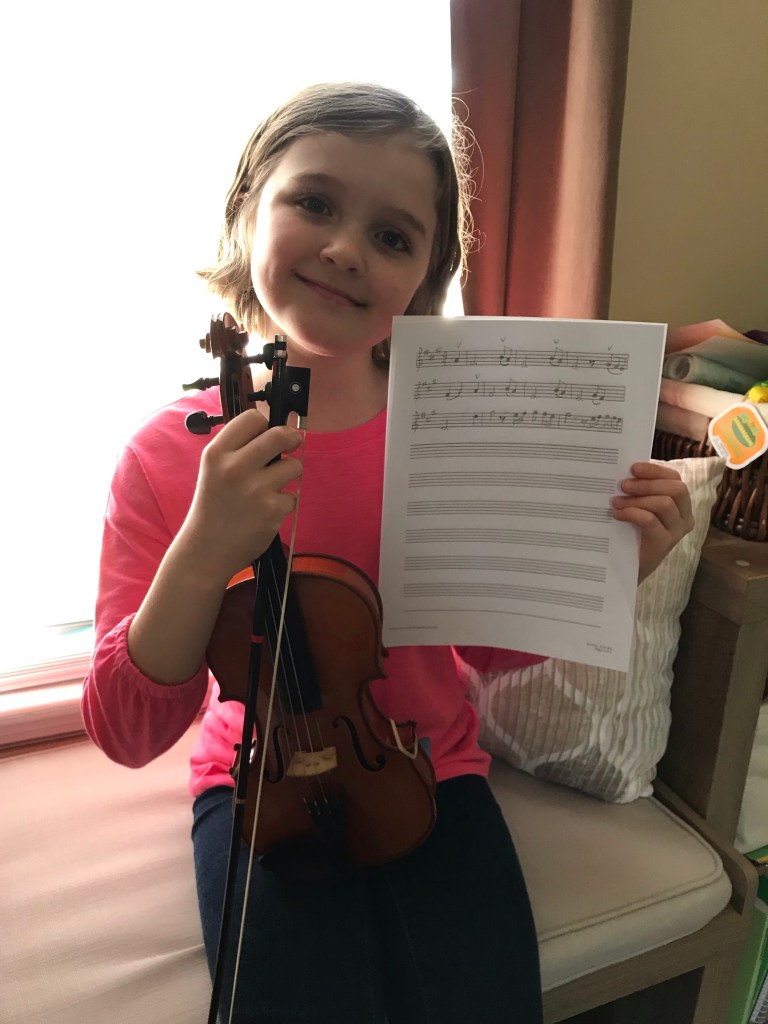
Older students may be ready to start with a clean staff and construct a working melody of their own. My 8-year-old daughter has just entered this stage, and I am loving this front seat view of her creative experimentation. When she presents a rather notable melody, I grab my phone to voice record her humming it. Then we put it down on manuscript paper. She plays the violin, so we always choose a key that is playable for a young violin student. When my daughter sees her own original melody written on paper, she can hardly contain her excitement and feels like it would be a complete waste of a day unless she plays it.
I believe that our children need to be given many opportunities to create and create and create. If they write 100 melodies in a year, they will be able to start discerning a good tune from a lesser one, a good hook from an unmemorable phrase. And as we feed this passion with music from great sources as well as the space and time to explore, a unique and deep artistry will sprout and grow and might even start spreading seeds of its own. Join with me in encouraging young writers!
 Come Sing Together